
Blog
How to Clean a Varsity Jacket with Leather Sleeves: The Ultimate Care Guide

So, you finally treated yourself to that classic varsity jacket. Maybe it’s a vintage find, or perhaps it’s a high-quality woolen jacket you’ve been eyeing for months. It looks sharp, feels heavy, and gives off those timeless collegiate vibes. But then it happens—a coffee splash, a smudge of grease, or just the inevitable buildup of “life” on those crisp leather sleeves.
Panic sets in. You can’t just toss it in the wash like a standard hoodie. The mix of delicate wool and genuine leather makes cleaning it feel like a high-stakes science experiment. Don’t worry, though. I’ve spent years obsessed with garment care, and I’m here to tell you that you can absolutely clean a varsity jacket with leather sleeves at home without ruining it.
In this guide, I’ll walk you through the process step-by-step. We’re going to go through how to clean the wool part, what to do (and what not to do) with the leather sleeves, and the small mistakes that can ruin the jacket — like tossing it in water and ending up with shrunken wool or stiff, cracked leather.
Why You Can’t Just Throw It in the Wash
Before you reach for detergent, here’s the thing: a varsity jacket isn’t made like a regular hoodie. It’s usually a mix of wool on the body and real or faux leather on the sleeves. Wool reacts badly to hot water and rough spinning — it can shrink or lose its shape. Leather is even more sensitive. Too much water dries it out, and once it dries out, it can start to crack. That’s why you can’t treat it like normal laundry and hope for the best.You’re dealing with two completely different materials that have opposite needs.
Wool is a natural fiber that loves to shrink if it gets too hot or agitated. Leather, on the other hand, is skin. It needs moisture to stay supple, but too much water can cause it to stiffen or rot. When you combine them, you can’t use a “one size fits all” cleaning method.
If you see a tag that says “Dry Clean Only,” listen to it for deep cleans. But for seasonal maintenance and spot cleaning, the following steps will keep your jacket looking brand new for years.
Step 1: Cleaning the Leather Sleeves
The leather sleeves usually take the most beating. They rub against tables, pick up oils from your hands, and get hit by the elements. Here is how to handle them properly.
Step 2: Wipe Down Surface Grime
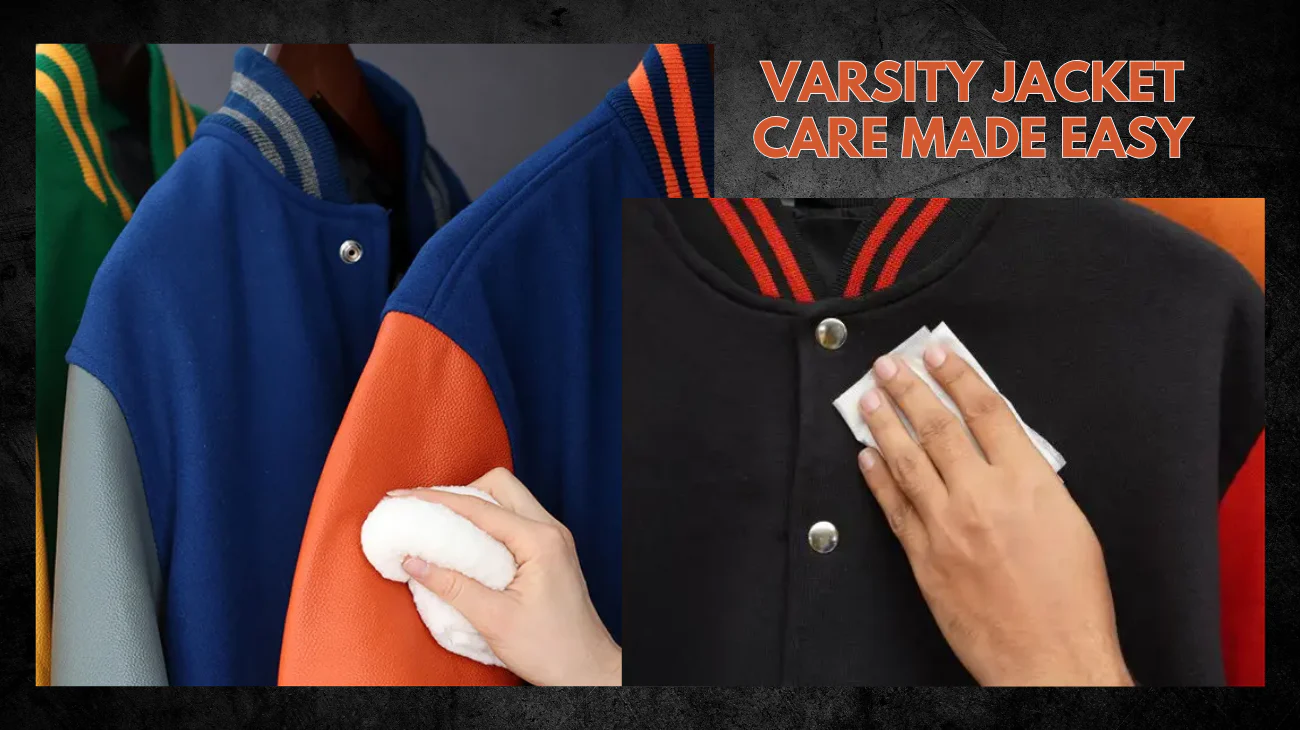
Start with a dry, soft microfiber cloth to buff away any loose dust. Once that’s done, mix a few drops of a very mild, pH-balanced soap (like baby shampoo) into a bowl of lukewarm water. Dip your cloth, wring it out until it’s just barely damp, and gently wipe the sleeves.
Pro Tip: Never soak the leather. If the water penetrates too deep, it can strip the natural oils and leave the sleeves feeling like cardboard.
Step 3: Tackle Tough Stains
Ink Marks: If you find a pen mark, dip a cotton swab in a tiny bit of rubbing alcohol. Dab—don’t rub—the spot and dry it immediately with a hair dryer on the lowest, coolest setting.
Oil or Grease: Sprinkle some cornstarch or talcum powder on the spot. Let it sit for at least five minutes (or overnight for stubborn stains). The powder will pull the oil out of the leather fibers. Brush it off gently afterward.
Step 4: Condition for Longevity
After cleaning, the leather needs to be replenished. Use a high-quality leather conditioner once the sleeves are dry. This step is non-negotiable if you want to prevent cracking over time.
Step 5: Caring for the Wool Body
The wool body of your woolen jacket is the heart of the garment. It’s warm and durable, but it’s a magnet for lint and odors.
Spot Cleaning the Wool
If you have a specific stain on the wool, use a “dab and lift” technique. Mix a wool-safe detergent with cold water. Dip a clean cloth and press it into the stain. Avoid rubbing at all costs! Rubbing wool causes “pilling,” those annoying little fuzz balls that make a jacket look old and worn.
Read Also : Stranger Things Season 5 Finale Ending Explained – Full Breakdown
Deodorizing Without Water
Wool holds onto smells—smoke, perfume, or just the “closet” scent. Instead of washing the whole thing, try these tricks:
The Baking Soda Method: Place the jacket in a large, airtight container with an open box of baking soda for 24 hours. The soda will absorb the odors without touching the fabric.
Steam Refresh: Use a handheld steamer on the wool sections only. The heat kills bacteria and relaxes the fibers, but keeps the steam away from the leather sleeves!
How to Properly Dry Your Varsity Jacket
Drying is where most people go wrong. If you hang a heavy, wet varsity jacket on a thin wire hanger, the weight will stretch the shoulders and ruin the silhouette.
Always lay the jacket flat on a clean, dry towel. Reshape the wool and straighten the sleeves. Keep it far away from direct sunlight or space heaters, as extreme heat is the enemy of both wool and leather. Let it air dry naturally in a well-ventilated room.
Quick Maintenance Tips for Every Season
To avoid having to do a deep clean every month, follow these simple habits:
Use a Lint Roller: Spend 30 seconds rolling the wool body after you wear it. It keeps the fibers clean and prevents debris from settling in.
The “Broad” Hanger Rule: If you must hang it, use a wide, padded hanger to support the weight of the leather sleeves.
Immediate Action: Spilled something? Blot it immediately with a dry paper towel. Don’t wait for it to set.
Conclusion
According to Woolen Jacket, Learning how to clean a varsity jacket with leather sleeves isn’t just about removing dirt; it’s about preserving a piece of your personal style. By treating the wool with a gentle touch and keeping the leather hydrated, you ensure that your jacket ages gracefully rather than falling apart.
Remember, patience is your best friend here. Take it slow, use the right products, and your favorite varsity jacket will stay in your rotation for a decade or more.